
More and more people are treating a tattoo as a personal story. The style determines not only the look, but also the permanence, healing and how the design sits on the body. In this guide, you will learn about the most important styles and techniques, the differences between them and tips on how to choose them to suit your skin area and plan for your first session.
A well-chosen style makes later care easier and reduces the risk of disappointment. You also gain consistent direction when you want to expand the tattoo in the future with a sleeve or larger composition.
What are the main styles of tattooing and how do they differ?
In the world of tattooing, you will find a variety of styles that allow you to express yourself. The main differences between them are the thickness of the lines, the colour palette, the way of shading and the level of detail.
Here are popular tattoo styles:
- Realism - imitates light and textures, aiming for as much fidelity with reality as possible;
- traditional and neo-traditional - relies on strong contours and clear shapes, often with a limited colour palette;
- graphic forms - such as blackwork or geometry, build form with contrast and negativity, often using only black;
- Ornamental and ethnic - draw inspiration from ancient cultures, characterised by rhythmic patterns;
- Watercolour - imitates paint spills, often without outline, giving a light, painterly effect;
- minimalist tattoos - are based on simple characters, thin lines and small symbols;
- Japanese - cover larger parts of the body, using classical motifs and rich symbolism;
- typographic (lettering) - focuses on typeface and word placement, treating the text as the main artistic element.
Each of these styles offers a unique aesthetic, allowing you to create a piece that is perfectly suited to your personality and vision.
Which techniques produce a realistic effect and which a graphic one?
Realism is created by soft tonal transitions, layered shading and shade blending.
The realistic effect is created through smooth gradients, precise transitions between black and colour and working with different needle configurations. Graphic patterns rely on strong contours, flat fills, dotting, the intermingling of black with negative and clear geometry. The graphic approach tends to be more legible from a distance; realism usually requires a larger format.
How do you choose a style for your body shape and skin area?
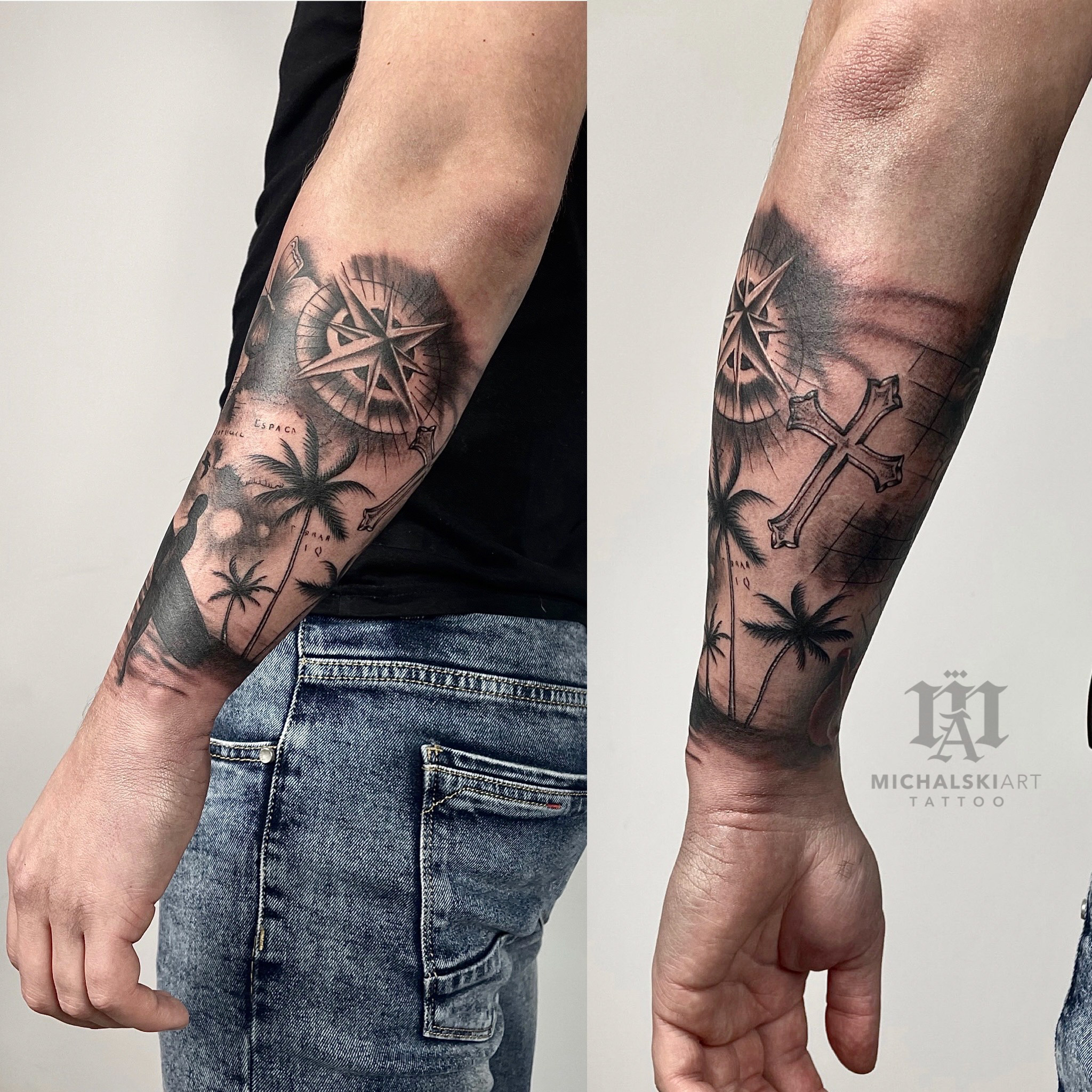
The right style of tattoo is best suited to your body proportions, natural muscle layout and level of sun exposure. Large detail looks better on the back, thigh and arm, while small, simple forms work well on the wrist, ankle and behind the ear. Vertical motifs slenderise the shoulders and calves, while flowing pieces go well on the ribs and hips, although these are more sensitive areas. If you are planning a sleeve, think about a consistent axis and negative around the elbow and wrist.
Also bear in mind the durability of the design. A dark style such as blackwork is visually resistant to tanning, while watercolour and light colours lose intensity more quickly. For scars and cover-ups, denser contrast and larger elements that effectively cover up the previous pattern work better.
What are dotwork, blackwork and continuous line techniques?
Learn the details of dotwork, blackwork and continuous line techniques, which feature unique approaches to form and detail.
- dotwork: builds up the image with dots, giving soft shadows, mandalas and geometries with great depth; it heals similarly to classical shading.
- Blackwork: relies on black to create dense fields, ethnic patterns and contrast with the negative; usually takes longer to heal large fillings.
- continuous line: creates form with a single uninterrupted contour, is minimalist and subtle, but requires a steady hand and thoughtful thickness to remain legible years later.
Each of these techniques offers different possibilities of expression and requires precision on the part of the artist.
What is the difference between old school and neo-traditional and new school?
Old school, neo-traditional and new school styles differ significantly in terms of contour, colour palette and overall aesthetics.
- old school: characterised by strong contours, a limited colour palette (red, green, yellow, black), simple shading and classic motifs such as nautical patterns or hearts with banners.
- neo-traditional: develops detail and colour, adding a richer palette, deeper shadows, flora, fauna and decoration, while maintaining a strong contour.
- new school: uses exaggerated perspective, graffiti aesthetics and comic dynamics, exaggerating forms for greater expression.
Although all three are legible, the differences in their complexity and expression allow for a wide range of artistic choices.
What qualities do watercolour, minimalist and tribal tattoos have?
Discover the distinctive features of watercolour, minimalist and tribal tattoos that offer a unique approach to pattern and expression.
- Watercolour: gives a painterly effect, mimicking blurs and splashes, often without contour; looks light but requires a good plan to avoid losing contrast over time.
- Minimalism: relies on simplicity, relying on thin lines and small symbols; elements that are too small can clash after years, so the right scale is important.
- tribal: these are strong black forms with ethnic roots, characterised by rhythmic shapes that match the anatomy; the large amount of black in tribals usually ages well and demands respect for the origin of the motifs.
Each of these styles offers a unique aesthetic, with its own challenges and advantages in terms of sustainability.
How does the style affect the soreness, healing and durability of the pattern?
The choice of tattoo style has a significant impact on the working time, the feel of the session, the healing process and the appearance of the design many years later.
Painfulness and healing time:
- Dense black fills and multi-hour sessions tend to be more noticeable and take longer to heal than contours alone.
- Thin lines can sometimes be faster, but require precision, which can affect the duration of the session.
- Realism in colour often needs layers, which can prolong both the tattooing and healing process.
Durability and aesthetics years later:
- The durability of the design is supported by strong contrast, adequate line thickness and the avoidance of microdetail in very small designs.
- Colours fade faster than black, especially in the sun and in areas exposed to friction, so it is worth considering these factors when choosing a palette.
- With possible laser removal, black often reacts better than some pigments, but the final results depend on the type of ink and skin, so consultation with a specialist is required.
How do you prepare for your style choice and first session?
To best prepare for your style choice and first tattoo session, follow a few key steps.
- define the message and gather inspiration: think about what you want to express and where you want to place the design; make brief notes and look through the portfolios of different artists, paying attention to style, lines, shading and colours.
- choose an artist and arrange a consultation: find an artist whose style matches your vision. At the consultation, discuss size, location, technique and possible limitations, bearing in mind that pricing is individual.
- Prepare before your session: a few days before your treatment, make sure you get enough sleep, hydrate your skin and avoid sunbathing. On the day of tattooing, eat a meal, wear comfortable clothes and reserve time to rest after.
- select professional tattoo studio : the studio should work with sterile equipment and disposable materials, taking care of hygiene and your comfort.
- follow post-tattoo instructions: carefully follow all care instructions after the procedure to ensure proper healing of the pattern.
A tattoo is a decision for years to come. An informed choice of style and location will ensure that the design stays with you in good shape. Give yourself time for a consultation, ask questions and build a design that makes sense in the here and now, as well as in the future.
Arrange a free consultation at our studio in the centre of Warsaw and choose the tattoo style that best tells your story.